


A video transcript of this article will be available soon on YouTube.
The following is a draft of the third chapter of a forthcoming League of Believers eBook titled Outwitted: How Christians Have Been Duped by the Enemy and What We Can Do to Wise Up. The first and second chapters can be found here and here.
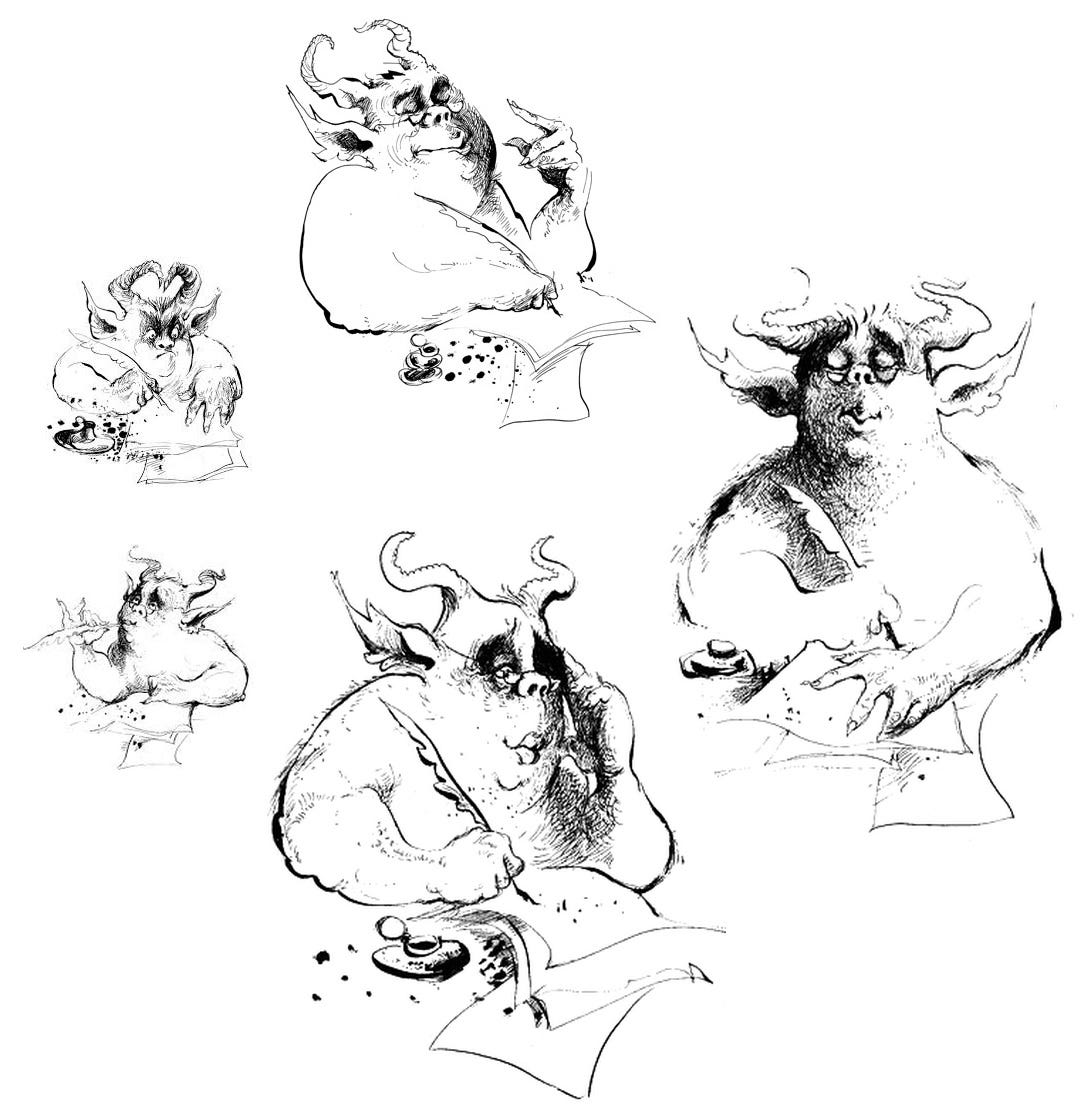
Father Forkedtongue
In his often imitated but never duplicated classic The Screwtape Letters, C. S. Lewis treats his readers to a series of letters written by Screwtape, a senior devil, to his nephew Wormwood, a junior tempter in training. In these letters, Satan is ominously and rather obliquely referred to as “Our Father Below.” If we were to venture another nickname for the old serpent (Revelation 12:9), we might refer to him jeeringly, and in true Screwtape fashion, as “Father Forkedtongue,” for lying is Satan’s native tongue (John 8:44).
By all accounts Father Forkedtongue has been especially busy in recent years, making hay out of the opportunities afforded to him by the internet, social media, and now artificial intelligence. Add to this declining social cohesion and rising distrust of traditional institutional gatekeepers1 and you’ve created the perfect storm for mass demonic deception. Despite the forecasts of the revivalists and postmillennial Pollyannas, this is precisely what God warned us would take place in the lead up to the great falling away (2 Thessalonians 2:3) of the last days (1 Timothy 4:1):
“Now the Spirit expressly says that in latter times some will depart from the faith, giving heed to deceiving spirits and doctrines of demons.”
We have outlined Satan’s standard operating procedure for temptation in Genesis 3, identified deception as its primary feature, and God’s word, character, and people as its primary targets. To better equip ourselves in the the emerging age of deception and disinformation, we must now describe the enemy’s most common lies in concrete terms, as if Father Forkedtongue himself had personally cataloged them and sent us the list first-class.
Although it would be impossible and unneccesary2 to catalog every lie Satan has ever peddled to Christians on the nature of Scripture, God, and the Christian himself, the following three sections provide a summary of the more prevalent and impactful lies, particularly as they taken shape in the modern American Church.
Scripture slander
Some of the enemy’s most common and effective lies are directed at the Christian’s understanding of the Bible, also known as the doctrine of Scripture. Traditionally, the doctrine of Scripture encompasses teachings pertaining to the Bible’s inspiration,3 inerrancy,4 authority,5 and related topics. Along these lines, the enemy has caused great damage among American Christians by convincing them of the following slanders on Scriptures itself:
“Since the Bible lacks sufficient clarity, you, as an average believer, cannot reasonably ascertain its position on any number of key doctrinal and practical debates.”
Historically, one of the major correctives to this lie came from the Protestant doctrine of the perspicuity of Scripture. To say that Scripture is perspicuous is to say that its basic meaning is transparent, that is, clear, plain, and understandable, even to the mostly ordinary folk to whom it was originally,6 and is now currently, addressed.7
While acknowledging, as even the Biblical authors themselves acknowledge, that some portions of Scripture are harder to understand than others (e.g., 2 Peter 3:16), we can be confident of Scripture’s perspicuity since it rests on the logically antecedent doctrine of Scripture’s inspiration. Since God is the ultimate author of Scripture and a perfect communicator, He is perfectly capable of getting His message across to its intended audience. There is a rule in writing that all authors will be familiar with: If your readers cannot understand what you have written, then it is your fault, not theirs.
Thus, what those who accuse Scripture of being unclear are actually alleging is that God, the author of Scripture, is a lousy communicator. He could create all things through His spoken word (Genesis 1), redeem all things by His incarnate Word (John 1), but He couldn’t effectively communicate anything through His written word. For the believing Christian, this conclusion is simply untenable. If God’s word sounds unclear, it is only to those who do not have ears to hear (e.g., Matthew 11:15).
Example: “Since many Christians disagree on divorce, birth control, same-sex attraction, etc., the Bible must be ambiguous on these topics.”
It’s understandable why average Christians would conclude that if even brilliant Bible scholars cannot reach a consensus on pressing ethical dilemmas like these, then there is little hope that they, as mere laypeople, will be capable of discerning God’s will.
The mistake here is assuming that disagreements on such questions hinge primarily on one’s scholarly credentials or lack thereof, which they most certainly do not.8 In reality, ninety-nine percent of the confusion stems from sinners like you and me attempting to accommodate their personal pet compromises by dishonestly reinterpreting the Scriptures with a loaded agenda. Suddenly, passages with straightforward meaning and implications are labelled “problematic,” “difficult,” or “nuanced” when in reality the difficulty lies not in understanding them but in obeying them.
“If an issue is not specifically addressed in the Bible9 then it is up to your individual Christian conscience to judge whether it is right or wrong for you.”
Related to the first slander above, this lie reasons that since the Bible is a limited, ancient document, it simply does not address, much less foresee, the many complex social and technological conundrums we moderns face on a daily basis. Modern medicine, for example, did not exist in antiquity, so Christians today are left to sort it out themselves as best they can on an individual, case by case basis (Romans 14:5):
“One person considers one day more sacred than another; another considers every day alike. Each of them should be fully convinced in their own mind.”10
One major issue with this thinking is that is assumes that Scripture’s intent, meaning, and application are limited to the finite understanding of its ancient human authors, something no doctrine of divine inspiration worth its salt would claim.
Further, and more importantly, God expects mature, thinking Christians to glean general principles from matters the Bible specifically addresses and apply them to related matters the Bible does not specifically address. The Bible need not, and indeed cannot, spell out in precise detail what we should do on each and every iteration of a matter without being both intolerably pedantic and infinitely long.
Example: “The Bible does not specifically address the modern medical practice of gender transition surgery,11 so as a Christian, I am free to accept or reject it based on my personal feelings and circumstances.”
The problem is that the Bible does speak to God’s good design of the male-female gender binary (Genesis 1:26–31, 5:1, 2; etc.), condemning all confusions of it as sin (Romans 1:26–32; 1 Corinthians 11:14; etc.). This includes, for example, an explicit prohibition of transvestitism.12 Thus, if Scripture tells us that God forbids men and women from swapping clothing, is there any doubt whatsoever as to whether this same God would forbid men and women from swapping genitals?1314 Reasoning from one instance of a thing to another, especially from the lesser to the greater or vice versa, is demonstrated for us time and again in the Bible (Matthew 7:11; Luke 11:13; etc.). It is no wonder that God expects us to reason likewise as rational, Biblically-informed believers.
Deity defamation
Another major subset of the enemy’s lies are aimed at the Christian’s understanding of the nature and character of God, what is commonly termed the doctrine of God or theology proper. The great American preacher A. W. Tozer once memorably observed that:
“What comes into our minds when we think about God is the most important thing about us. The history of mankind will probably show that no people has ever risen above its religion, and man’s spiritual history will positively demonstrate that no religion has ever been greater than its idea of God. Worship is pure or base as the worshiper entertains high or low thoughts of God.”15
Thus, to achieve a low and unworthy witness to God among professing Christians, the enemy has sought to convince as many of us as possible of the following defamatory statements about God’s character:
“God is untrustworthy and does not have your best interest in mind. If you want what’s best for you, don’t wait to receive it from Him in His way and in His timing. Get out there and make it happen yourself by any means necessary.”
One of the fundamental affirmations of the Christian faith is that God not only exists, but is good16 (Psalm 34:8), rewarding all those who earnestly seek Him (Hebrews 11:6). God is not a stingy, impossible to please boss (Matthew 20:15, 25:24), nor a mercurial, abusive parent who seizes on an innocent request as an opportunity to harm us (Matthew 7:9–11). Our heavenly Father knows what we need before we ask (Matthew 6:8) and He delights to give us His Spirit and kingdom (Luke 11:13, 12:32).
But this is not the whole picture of the Father’s dealings with us as His children, for God not only protects and provides for His children, like any good father, He also disciplines them.17 Indeed, the Fatherly discipline God mediates through our testings and trials are proof positive, not that God has forsaken us, but rather that we indeed His beloved children (Hebrews 12:7, 8, 11):
“Endure hardship as discipline; God is treating you as His children. For what children are not disciplined by their father? If you are not disciplined—and everyone undergoes discipline—then you are not legitimate, not true sons and daughters at all. […] No discipline seems pleasant at the time, but painful. Later on, however, it produces a harvest of righteousness and peace for those who have been trained by it.”
Although it may be tempting to read into our trying, disappointing, and often confusing circumstances an uncaring aloofness, or even a vindictive malevolence, on God’s part, nothing could be further from the truth!18 Rather, providential suffering constitutes a core component of the Christian life, a life which requires us to take up our cross daily (Luke 9:23) and joyfully embrace our trials for the good they will bring about (Matthew 5:12; James 1:2; 1 Peter 4:12, 13), rather than striving in vain to avoid them.19 God is faithful, trustworthy, and true. He always has our long-term best in mind, even if reaching it requires tremendous sacrifices in the short-term.20 Best of all, He promises never to abandon us in our afflictions (Hebrews 13:5).
However, if we give credence to Satan’s divine character assassinations, give up on God’s good promises for us, and resort to doing things our way rather than His, then life’s burdens will only get heavier and we will be shouldering them all on our own (Matthew 11:28–30; Acts 26:14).21
Example: “I’ve been holding out for years for God’s best for me with respect to my calling/career, living situation, potential spouse/children, etc. and I just can’t wait any longer. To fulfill these desires, I must lower my standards and go down a route I know is displeasing to God.”
When the waiting drags on for longer than we’d hoped it’s easy to circle back in our hearts to options we know deep down inside are not God’s will for us.22 But resorting to sinful options, or even options that, while not sinful in and of themselves, nevertheless do not align with God’s particular calling on our lives, will always amount to settling for far less than what God, “who is able to do exceedingly abundantly above all that we ask or think” (Ephesians 3:20), would have given us had we stuck it out with Him just a little bit longer. Trading long-term blessings in the future for short-term relief in the present, true and lasting solutions for the “quick fix,” is never the right move in the final analysis (Hebrews 12:16, 17; cf. Genesis 25:32, 34):
“See that no one is sexually immoral, or is godless like Esau, who for a single meal sold his inheritance rights as the oldest son. Afterward, as you know, when he wanted to inherit this blessing, he was rejected. Even though he sought the blessing with tears, he could not change what he had done.”
“Because God is merciful and patient, desiring to give you ample time to repent, and thus His wrath and judgment have been delayed and doled out gradually, He therefore approves of your sin.”
When one first knowingly violates an obvious moral taboo, it may come as a relief to discover that the consequences of said violation are either absent or not nearly as bad as one anticipated. The response to this realization is often to tell others to “come on in; the water’s fine!” The Bible, however, understanding both God’s nature and human nature, anticipates such responses and shows us how profoundly mistaken they are. The Apostle Peter warns against misconstruing God’s “slowness” to judge the world as indifference to, or approval of, the world’s sin, reminding us that (2 Peter 3:8, 9):
“With the Lord a day is like a thousand years, and a thousand years are like a day. The Lord is not slow in keeping His promise, as some understand slowness. Instead He is patient with you, not wanting anyone to perish, but everyone to come to repentance.”
The Apostle Paul likewise warns against twisting God’s patience into permission to sin (Romans 2:3, 4):
“So when you, a mere human being, pass judgment on them and yet do the same things, do you think you will escape God’s judgment? Or do you show contempt for the riches of His kindness, forbearance and patience, not realizing that God’s kindness is intended to lead you to repentance?”
The issue at play here lies at the very heart of God’s character: get this wrong, and you’ve misunderstood a significant and essential aspect of what it means for God to be God. When God disclosed Himself to Moses on Mt. Sinai He proclaimed the following immortal words (Exodus 34:6, 7):
“The Lord, the Lord, a God merciful and gracious, slow to anger, and abounding in steadfast love and faithfulness, keeping steadfast love for thousands, forgiving iniquity and transgression and sin…”
We all love this part of God’s nature, and indeed His mercy and forgiveness are glorious, but that is not where God’s revelation ended! If you’ve only gotten this far, knowing and accepting God as the forgiver of your sins, then you haven’t gone nearly far enough. At best, you are only an infant in your understanding, if even that (1 Corinthians 3:1–3; Hebrews 5:11–14, 6:1–3). God continues (Exodus 34:7, emphasis mine):
“…but who will by no means clear the guilty, visiting the iniquity of the fathers on the children and the children's children, to the third and the fourth generation.”
Now that is the part of God’s nature that we tend to gloss over, if not ignore altogether. However, if we fail to hold each of these critical aspects of God’s character together, balancing His merciful and gracious dimensions with His absolute holiness and justice, then we will inevitably distort God’s “amazing grace” into an empty cliché, a lame, catch-all excuse for compromised Christians who know better but can never bring themselves to actually do better (2 Timothy 3:7). Both Biblical and Church history23 assure us that those who divorce God’s goodness from His severity (Romans 11:22) are bound to hawk sinful indulgences, counterfeit licenses to sin that the people will take advantage of to their own condemnation (Romans 3:8):
“Why not say—as some slanderously claim that we say—‘Let us do evil that good may result’? Their condemnation is just!”
And (Hebrews 10:28, 29):
“Anyone who rejected the law of Moses died without mercy on the testimony of two or three witnesses. How much more severely do you think someone deserves to be punished who has trampled the Son of God underfoot, who has treated as an unholy thing the blood of the covenant that sanctified them, and who has insulted the Spirit of grace?”
Repeat slowly after me, no, shout it from the rooftops: Freedom from sin is NOT freedom to sin—it is precisely the opposite (Romans 6:1, 2; Galatians 5:1; 1 Peter 2:16; etc.)!
Example: “My first spouse and I divorced over irreconcilable differences and we are both now happily remarried. Some judgmental Christians have told us that by divorcing and remarrying in this manner that we have both entered into adulterous remarriages that God does not approve of. But how could this be if everyone agrees that our second marriages are so obviously blessed by God? Even if we did sin in entering these unions, surely He will understand and forgive us.”24
Numerous love songs, seeking to glamorize infidelity, have wondered “How could it be wrong if it feels so right?”25 But romantic feelings and present circumstances are notoriously misleading metrics for assessing God’s approval or disapproval of a thing.
For a time, the newly wed same-sex couple may feel great about their unlawful union. Perhaps they entered into it after years of tortured secrecy and are now experiencing the cathartic relief of “coming out” into the public and making their illicit relationship legal.26 The truth however is that no matter how these individuals may feel in the moment, unless they repent, forsake their unlawful union, and believe on the Lord Jesus Christ (Luke 13:3), they are on a headlong, downhill crash course to judgment. That doesn’t mean that the ride is devoid of its temporary thrills and pleasures. The man who commits suicide by jumping off an exceedingly tall building may initially feel a rush of relief and even a sensation akin to flying as he careens to his abrupt and gruesome end.
Although many commit the fatal error of mistaking the merciful lag time between sin and final judgment for God’s approval or forgiveness of sin, the honest observer has to admit that, in retrospect, there were signs of judgment all along: a lack of peace, a nagging sense of regret, a disquieted conscience, bitterness, unforgiveness, seemingly inexplicable levels of family dysfunction, etc. All these were flashing red check engine lights on the dashboard of your soul, the stinking, rotten fruits of sin in your life that had yet to be properly dealt with through repentance and public confession (Psalm 32:3–5; Proverbs 28:13; James 5:16; 1 John 1:8–10; etc.).
Christian, does any of this sound familiar to you? If so, stop rationalizing your sin. Do not test the Lord’s patience. Seek Him while He may be found (Isaiah 55:6, 7; cf. Isaiah 1:16–19):
“Seek the Lord while He may be found; call on Him while He is near. Let the wicked forsake their ways and the unrighteous their thoughts. Let them turn to the Lord, and He will have mercy on them, and to our God, for He will freely pardon.”
Christian calumny
A final category covering many of the enemy’s lies focuses on the Christian’s understanding of himself, or what we might call Biblical anthropology. Roughly speaking, this doctrine includes everything the Scriptures teach regarding what it means to be a human in Adam (e.g., Genesis 1, 2) and a new human in Christ (e.g., 1 Corinthians 15).
As others have noted, anthropology was the most hotly debated topic in the Apostolic period,27 Christology and theology28 the most debated in the Early Church,29 soteriology30 in the Reformation,31 the doctrine of Scripture in the 20th century,32 and now, coming full circle, anthropology is once again the center of controversy in the early 21st century. As such, the following ten lies may very well constitute the grounds of the next major battles within the American Church, all of which will revolve around the question “What does it mean to be a Christian?”
“If my conscience does not condemn me, then Paul says it’s OK for me to commit an act that others might consider sinful (Romans 14; 1 Corinthians 8; etc.).”
In fact, Paul said no such thing. What he did say in response to such accusations was “May it never be!” and “God forbid!” (Romans 6:15, 7:7, etc.). The fact that a supposed Christian can sin without suffering the pangs of conscience says less about the action’s morality than the state of that individual’s conscience. When speaking of true matters of Christian conscience, Paul was not referring to things that are inherently sinful like idolatry, murder, adultery, etc., but rather various adiaphora (“indifferent things”) involving religious observances, dietary customs, etc. (see footnote 10).
Example: “If I am able to watch pornographic content that others might consider sinful without feeling a sense of guilt, then it is not sin for me.”
On the contrary, sin is sin—in this case, the sin of lust, or adultery (Matthew 5:28)—regardless of whether one recognizes it or not.33
“Because my compromise only goes part of the way in committing a sinful act, it is not a bid deal and I can probably get away with it.”
Jesus condemns both the complete acts of murder of adultery as well as their beginnings in the heart in the form of hate and lust (Matthew 5:21–30). Jesus expects higher and holier things from His followers than the mere outward trappings of hypocritical, manmade religion (Matthew 5:20, 43–48). Thus, even “little sins” are big deals to God (James 2:10). A little leaven (1 Corinthians 5:6; Galatians 5:9), one small fly (Ecclesiastes 10:1), and one little fox (Song of Solomon 2:15) can do major, lasting damage. And as for getting away with sin, we can be sure of this: Our sins will catch up with us (Numbers 32:23).
Example: “If I am publicly pro-life, but privately doing all I can to avoid more children, then I can avoid the stigma of abortion while obtaining the same outcome34 through birth control.”
Birth control is but a milder, gentler version of obviously barbaric practices like late-term abortion. Though these latter methods can still prick even the most seared of consciences, the genius of birth control is that it rarely does, despite often being little more than abortion by another means.35 The hateful contempt for life in the hearts of those who practice birth control is the same seed that blossoms into death in the actions of the calloused abortionist (James 1:15).
“Because my sin is not as bad as its pagan counterpart, it is fair game for me as a Christian.”
They say the difference between so-called progressive leftist policy and conservative rightwing policy is about ten years. So it is with Christian social mores and those of the broader, unbelieving culture. Eventually, Christian compromises catch up to those of the pagan, even if the Christian’s are a bit late to the party. For the believer, who is supposed to lead the unbeliever to God as the “salt of the earth” and “light of the world” (Matthew 5:13–16), this state of affairs simply will not do.
Example: “If I oppose same-sex marriage, then it is OK for me to divorce and remarry.”36
It’s true that most Christians have not gone as far in their desecration of holy matrimony as their pagan neighbors have, but it was the former that paved the way for the evils of the latter through the Church’s refusal to hold the line where God had placed it in the first place (Matthew 19:3–9; Mark 10:2–9): One man, one woman, united for life.37 Therefore it is we Christians who are guilty of the greater sin (John 19:11).
“If the majority of Christians and respectable Christian leaders, or my pastor, church, denomination, tradition, or trusted Christian friends, family members, counselors etc. say that something is OK for me to do then it must be OK.”
This argument contains two common logical fallacies: the argument from the majority (argumentum ad populum) and the argument from authority (argumentum ab auctoritate). The basic form of these arguments runs as follows: “Since majority opinion X or authoritative figure Y makes claim Z, then claim Z must be true.” The obvious problem with this logic is that claims do not magically become true when a 51% majority or respected expert decides to believe it. If a claim is true then it is true regardless of whether anyone believes it! And do we really need reminding of the many well-documented instances in recent memory when the majority consensus and experts class have been absolutely, one hundred percent dead wrong?38
Example: “If most contemporary Christians permit some form or another of divorce and remarriage, birth control, non-traditional gender roles, lavished lifestyles, pornography, illicit drugs, etc., and many trusted, authoritative Bible teachers, seminaries, parachurch organizations, etc. defend such practices, then surely they can’t all be wrong!”
Yes, they can (Romans 3:4)! On each of these issues, a convincing case can be made that it is the majority of Christians today, and not the Bible or the majority of faithful believers across the ages,39 that are in the wrong.40 Scripture41 and Church history42 are replete with examples of this exact situation. Don’t succumb to the peer pressure! The opinions of men wax and wane, but the word of the Lord endures forever (Isaiah 40:8).
“If I have really been going the extra mile in my Christian walk recently, then I can cut myself a little slack here and there as a reward for my good behavior.”
This little slight of hand is known as moral self-licensing, giving oneself a pass on something immoral because one has been particularly moral otherwise. Think of the individual who has been faithfully adhering to a strict diet giving himself permission to enjoy extra cheese, bacon, and In-N-Out spread on his Double-Double (animal style, of course)—after all, he will be chasing it down responsibly with an extra large Diet Coke. When this same logic is applied to the weightier matters of God’s law (Matthew 23:23), we can very quickly find ourselves engaging in the same kind of hypocrisy and self-deception that Jesus condemned among the most outwardly observant Jews of His day (e.g., Matthew 23). Sadly, we modern Christians do this sort of thing all the time—after all, we deserve it.
Example: “Because I am a stalwart defender of Biblical principles in the public sphere, and would never take the Lord’s name in vain or blaspheme, I will allow myself the frequent use of expletives in my ministry content.”
One’s good deeds are no excuse for one’s bad deeds, but rather the strongest argument against them (Ezekiel 18:24). When it comes to obscene language, no amount of God-honoring speech can compensate for God-dishonoring profanity (Ephesians 5:4; cf. Ephesians 4:29, Colossians 3:8, etc.):
“Let there be no filthiness nor foolish talk nor crude joking, which are out of place, but instead let there be thanksgiving.”
“If someone wrongs me, then I am free to wrong them back.”
Rarely do we come out and state the logic behind our sins in such stark, morally indefensible terms, but doing so helps us to see the absurdity of it. As those who are called to live by the Spirit and not according to the flesh (Romans 8:5), believers must follow Christ’s example by loving our enemies (Matthew 5:44; 1 Peter 3:9; etc.) and refusing to return evil for evil (1 Peter 2:23). If we merely love those who love us and wrong those who wrong us, then we are no better than unbelievers (Matthew 5:46) and we might as well skip all the trouble of pretending to follow Christ.
Example: “My wife cheated on me, so I am justified in divorcing her and remarrying another women.”
Since Jesus called this very thing adultery (Matthew 5:32, 19:9; Mark 10:11, 12; Luke 16:18), we can restate this argument as “If my spouse cheats on me, then I can cheat on my spouse.” Now, does that sound like something Jesus would endorse? If you think so, then you don’t know Jesus.43
“If I sin, but confess it to God and ask for His forgiveness, then I can keep repeating the sin, and others like it, while remaining in good standing with God and without incurring any negative consequences.”
Like the old “lather, rinse, repeat” shampoo instructions, this pattern of “sin, repent, repeat” comes straight from Satan, not Scripture. Jesus commands us to “Go, and sin no more” (John 8:11), lest we incur even great consequences for our disobedience (John 5:14; cf. Luke 12:47, 48, Matthew 12:45, etc.). The confident cry of the believing heart is ever and always “Sin shall not have dominion over me!” (Romans 6:14) since, in a very real sense, sin cannot have dominion over us once we have truly come to know Christ as Savior and Lord (Luke 6:46; 1 John 3:9; etc.). In the end, with God’s help, we will get the better of the sin, not the other way around. The fact that we will not, in this life, attain sinless perfection (1 John 1:8–10; Philippians 3:12) is no excuse for settling for sinful defection.
In addition to regularly confessing and turning from one’s sins before God (e.g., Psalm 51:4), repentance that leads to true and lasting restoration and reconciliation must also include, where applicable, confessing one’s sins to others (Proverbs 28:13; Matthew 5:23, 24; James 5:16; 1 John 1:9), making restitution (e.g., Luke 19:8, 9), and facing the real-world consequences of one’s actions whatever they may be (Acts 25:11; Romans 13:4; etc.). Forgiveness is not a blanket “Get out of jail free” card that releases us from all accountability, but rather the entryway into right living, whatever the cost.
Example: “My routine sexual sins are just a part of the normal Christian journey, where repeated bouts with temptation often result in failure. I don’t hide my struggles from the Lord, despite being, shall we say, less than transparent with my wife. After all, ‘I’m not perfect, just forgiven.’”
Aside from the trite clichés, the problem with this thinking is its conflation of what are in reality mirror image opposites: unrepentant disobedience and repentant obedience.
Unrepentant disobedience sins, regrets it, but never actually gets around to stopping the sinful behavior (Matthew 27:1–10; 2 Corinthians 7:10; Hebrews 12:17). Repentant obedience goes beyond the mere sense of shame and acknowledgement of guilt to actually ceasing from sin and doing what is right (Ephesians 4:28), the unmistakable fruits of genuine repentance (Matthew 3:8; Luke 3:8–14).
Furthermore, the truly penitent can freely admit their previous failures and ongoing struggles to others since they have received real forgiveness and have been cleansed of a guilty conscience (Hebrews 10:22). They are transparent, humble, and eager to make things right whenever and wherever they can (2 Corinthians 7:11).
Not so the wicked (Psalm 1:4)! Their game is to sin as much as they can get away with, conceal it at all costs, deny and deflect when confronted,44 admit as little as possible when found out, and aim for as many sympathy points during damage control as possible.
“Not perfect, just forgiven” indeed! For the authentic Christian it should be “Being perfected because receiving forgiveness.”
“Because some sins were tolerated in the Old Testament, and were committed by otherwise godly saints past and present, God will tolerate the same sins in my life today.”
One might reason that since Old Covenant heroes like king David had multiple wives (2 Samuel 3:2–5), committed adultery and murder (2 Samuel 11), etc., then perhaps God will tolerate similar “faux pas” in our lives as New Covenant believers. After all, David’s life and kingdom were spared after his infidelity and he was still considered “a man after God’s own heart” by posterity (1 Samuel 13:14; Acts 13:22). Things could have been so much worse.
However, this rosy revisionist history conveniently ignores the many dire consequences that David’s sin did incur (2 Samuel 12:10–14), including the tragic and untimely deaths of several of his children.45 Though the consequences of his disobedience could have been worse, the consequences of his obedience would have been so much better!46
The above reasoning also ignores the fact that with the coming of Messiah and the establishment of a new and better covenant (Hebrews 8:6), God no longer extends leniencies in the same manner He did in former days, for “In the past God overlooked such ignorance, but now He commands all people everywhere to repent” (Acts 17:30; cf. Romans 3:25, 26). If even the ancient Jew and gentile were without excuse for their disobedience, how much more the modern Christian (Romans 1–3; 1 Corinthians 10:11; Hebrews 2:2, 3)?
Example: “As a pastor I admit that my children are incorrigible delinquents. However, king David’s family was dysfunctional, and he was the shepherd of Israel (Psalm 78:70, 71). Even Billy Graham’s son Franklin went through a rebellious phase, and thus on some people’s reading of Titus 1:6, even Billy Graham would have been disqualified from ministry!”
Moral equivalencies like this may cause weak and irresolute church elder boards to back down, but they will not work on God. God’s perfection is the standard of all our conduct (Matthew 5:48), not the great but fallible men who seemed to set the standard, only to have fallen short of it just like the rest of us.
“Since God has already dealt with our past, present, and future sins and no longer takes any accounting of them whatsoever, our confessions of said sins are, at best, uneccesary and, at worst, offensive in God’s sight.”
This one’s a biggie folks and it is as misguided as the day is long. The problem is it all sounds so good. Christians are under grace (Romans 6:14). God remembers our sins no more (Hebrews 8:12). He has removed our sins from us as far as the east is from the west (Psalm 103:12). Therefore, the only thing we have to repent of is thinking we still have anything left to repent of!47 We cannot work our way into God’s good graces anyhow (Ephesians 2:8, 9), so let’s just revel in His free forgiveness and not sweat the small stuff.
At first blush this line of reasoning may come across as a humble, refreshing take on some of the Bible’s most glorious truths regarding salvation and forgiveness. The problem is that, taken as a whole, it is not only unbiblical but bizarrely impersonal. Refusing to even acknowledge one’s day-to-day wrongdoings against God? Try that approach with your spouse! “Now honey, I’d love to apologize for berating you in front of the guests, but you did enter into a binding marriage covenant with me based on unconditional love, so whether I’ve been a good husband or a lousy one on this occasion, you’re still required to love me just the same. Now let’s just drop the matter and pretend it never happened.” In addition to their daily bread (Matthew 6:11; Luke 11:3), Jesus taught His disciples to routinely ask their heavenly Father to forgive their sins as they forgive those who have sinned against them (Matthew 6:12; Luke 11:4).
Furthermore, nowhere in the Bible is God’s love treated as a kind of unconditional, carte blanche permission to sin (Romans 6:1, 2):
“What shall we say then? Are we to continue in sin that grace may abound? By no means! How can we who died to sin still live in it?”
Indeed, such distortions of God’s grace are the calling cards of godless, false brethren (Jude 1:4), not sincere believers who are eager to please their Master (2 Corinthians 5:9) and walk worthy of their high calling (Ephesians 4:1).
Finally, nothing in Scripture indicates that God’s forgiveness is limited only to an initial, one-time act at conversion. Make no mistake about it: No sin can be forgiven except on the basis of the finished work of Christ on the cross. But receiving Christ’s forgiveness requires that sin be properly dealt with through acknowledgement, confession, repentance, and faith (Romans 10:9, 10; James 5:15, 16; 1 John 1:8, 9; etc.) as the means by which we appropriate in real time what Christ did for us once and for all time (Hebrews 10:1–18). While this certainly begins at conversion when sinners are decisively forgiven and declared righteous by faith alone through justification (e.g., 1 John 2:12), it continues in all saints as part of the normal, ongoing spiritual disciplines of sanctification (e.g., 1 John 1:8–10; 2:1, 2) wherein our earthly lives are increasingly conformed to our heavenly standing in Christ (Colossians 3:1–3; Galatians 2:20; etc.).48
Example: “Each time I fall into sin I feel like an utter failure before God, as if His love for me and my good standing before Him rests entirely on whether I had a bad today or not. Instead of trying to clean up my act and win His approval, I’m simply going to refocus my attention on the fact that I am already forgiven, cleansed, and approved of in Christ by grace through faith, apart from works (Romans 3:28; Ephesians 2:8, 9). Jesus took my shame so that I never have to feel ashamed of my sins again!”49
Again, we must proceed with caution here, since there are many genuine truths, as well as distorted, misapplied half-truths, at play in this common line of thought.
While it would be a grave mistake on the one hand to think God’s love for us is based solely on our performance, it would be equally erroneous to think that our obedience has no bearing whatsoever on God’s approval (e.g., 2 Timothy 2:15) and love for us as Christians (Jude 1:20, 21, emphasis mine):
“But you [in contrast to ungodly, worldly scoffers], beloved, building yourselves up in your most holy faith and praying in the Holy Spirit, keep yourselves in the love of God, waiting for the mercy of our Lord Jesus Christ that leads to eternal life.”
The subtle error at work here is denying, ignoring, or putting at cross purposes the past, present, and future dimensions of salvation. We can bring these distinctions to light with a simple question: “As Christians, are we saved, being saved, or awaiting our salvation?” To this, we must reply “Yes,” since salvation has multiple aspects, one which has already occurred, one which is still occurring, and one of which has yet to occur.
Regarding the past, our justification50 is indeed an instantaneous, finished work. However, regarding the present, our sanctification51 is a gradual, unfinished work and, regarding the future, our glorification52 is an instantaneous, largely uncommenced53 work.
By understanding salvation holistically, we see that our initial pardon for sins committed prior to justification is not at odds with our ongoing need of forgiveness for sins committed during sanctification—indeed, the latter is grounded in, and the logical extension of, the former (John 13:10; 1 Corinthians 5:7; Ephesians 4:20–24; etc.).54
It also means that although God does accept us for Christ’s sake,55 He also accepts us based on the non-salvific works we do by His grace and Spirit precisely because we have been justified and made alive in Christ (e.g., Ephesians 2:4, 5, 10). Indeed, it is on the basis of our works that God will judge us (e.g., Matthew 25:31–46) and determine our rewards (e.g., 1 Corinthians 3:10–15).
Rather than focusing exclusively on justification in a simplistic, over-spiritualizing manner (Ecclesiastes 7:16; Hebrew 5:11–14, 6:1–3) while turning a blind eye to the very real problems staring them in the face, Christians who feel a proper sense of shame over remaining sin in their lives should: 1) stop sinning; 2) ask for God’s forgiveness; and 3) focus on accomplishing God’s will for their lives, even their sanctification (1 Thessalonians 4:3). The greatest affirmation Christians can give of God’s saving grace at work in their lives is its proper application and their personal cooperation (Philippians 2:12, 13):
“Therefore, my dear friends, as you have always obeyed—not only in my presence, but now much more in my absence—continue to work out your salvation with fear and trembling, for it is God who works in you to will and to act in order to fulfill His good purpose.”
“If I have felt convicted over a certain tendency, thought, behavior, etc. and have tried very hard to fight it, but cannot seem to overcome it, then it is probably an integral part of my nature that, while broken and disordered, may not be sinful in and of itself. Rather, it may instead represent an aspect of my unredeemed humanity that I should probably make peace with so long as I am in this body, while neither fully embracing nor rejecting it.”
If that argument sounds muddled and confusing that’s because it is. Welcome to the illogical “logic” of our cunning, oh so clever flesh, always seeking an inch to take a mile. Some sins do indeed lie at the core of our fallen human nature, that is, in the unrenewed mind, will, emotions, etc. of what the Bible calls our “old man” or “old self” (Romans 6:6; Ephesians 4:22; etc.). But this does not mean that such sinful elements are normative, essential, or beyond God’s power to change, even in this life. We must never embrace sin as an inseparable part of our identity, for man before the fall was originally made upright in God’s image (Genesis 1:31; Ecclesiastes 7:29), Christians are being renewed after that same image (Colossians 3:10), and will one day be free of all sinful deficiencies in glory (1 Corinthians 15:35–58). Such depravities may have formed the foundation of who we were in Adam (1 Corinthians 15:22), but that is no longer the case for those whose new foundation is Christ (Matthew 7:24-27; 1 Corinthians 3:11, 6:9–11). Hallelujah! He is mighty to save (Isaiah 63:1; Zephaniah 3:17).
Example: “I struggle with homosexual attraction and can’t seem to shake it, try as I may. Thus, while I will refrain from acting out on these desires as best I can, I will just have to resign myself to the fact that the desires themselves aren’t going anywhere anytime soon and I should embrace the reality that I am indeed a gay, celibate Christian.”
If we leave but a small a crack in the door open to sin and allow it to get a foot in, it will inevitably wedge its way in fully and wreak its hellish havoc. Sin is not content to sit nicely in the far corners of your heart. Like leaven (Galatians 5:9), its nature is to grow, metastasize, and eventually kill (Genesis 4:7):
“If you do what is right, will you not be accepted? But if you do not do what is right, sin is crouching at your door; it desires to have you, but you must rule over it.”
Any carve-out for sin, no matter how small and seemingly innocuous, will allow it to progress from the realm of our desires and thoughts to that of our will and actions. This compromise described above is therefore untenable, unstable, and radioactive. Either we reject sin root and branch or we do not reject it at all. God is able to remove any and all sinful desires and replace them with holy ones, full stop (e.g., Ezekiel 36:26, 27). To deny this because the victory isn’t easily won is to deny the overcoming power of God through plain, old-fashioned unbelief.
To that, we reply with the words of the great hymn writer John Newton: “Begone, unbelief! My Savior is near.”56
“Begone, unbelief, my Savior is near,
And for my relief will surely appear;
By prayer let me wrestle, and He will perform;
With Christ in the vessel, I smile at the storm.”“Consider Him who endured such opposition from sinners, so that you will not grow weary and lose heart. In your struggle against sin, you have not yet resisted to the point of shedding your blood.” Hebrews 12:3, 4
It’s a sick world after all
We are moving on from Satan and his lies to another member of the evil triumvirate of “the world, the flesh, and the devil.” If God created the world “very good” in the beginning then why is there such antipathy in the New Testament to what its authors commonly refer to as “the world”? Explore with us the Bible’s answers to this question in the next installment of the League of Believers.
Thanks for reading the League of Believers. We are committed to offering our content completely free of cost. You can support this ministry by:
Subscribing to the League of Believers.
Sharing the League of Believers with others.
Following, liking, and sharing our social media content on X and YouTube.
Sharing your feedback, including prayer requests, in the comments below or through emails to: feedback@leagueofbelievers.org
Praying for us and the message we are bringing to the Church (2 Thessalonians 3:1).
Churches, government agencies, legacy media outlets, academia, etc., that collectively serve as “gatekeepers” to limit public access to information, ideas, and fields, etc. (https://www.ebsco.com/research-starters/social-sciences-and-humanities/gatekeeping)
Here we must keep in mind Paul’s observation that “No temptation has overtaken you except what is common to mankind” (1 Corinthians 10:13). In other words, the temptations Satan employs against one of us are the same temptations he employs against all of us. Practically speaking, this means that we can prepare ourselves for temptations we have yet to face personally based on the experiences of believers who have already faced them.
Literally, God’s breathing out of the very words of Scripture through Spirit-controlled human authors (2 Timothy 3:16; 2 Peter 1:21).
The teaching that the Bible contains no errors in anything it asserts to be true.
The teaching that the Bible, as the Word of God, carries the weight of God’s authority such that the claims it makes upon all men in general, and believers in particular, are both final and binding on the conscience.
Primarily ancient Israelites, most of whom were farmers, shepherds, craftsman, and the like (e.g., Genesis 47:3).
While the meaning of any passage of Scripture has infinitely rich depths and multitudes of valid applications, the main thrust of its basic meaning should be clear to all—including babes (i.e., children) to babes in Christ (i.e., new converts) alike—from the outset, especially on matters of primary doctrinal importance. Or, as the Westminster Confession of Faith so memorably puts it (Chapter I “Of the Holy Scripture,” section VII):
“All things in Scripture are not alike plain in themselves, nor alike clear unto all; yet those things which are necessary to be known, believed, and observed, for salvation, are so clearly propounded and opened in some place of Scripture or other, that not only the learned, but the unlearned, in a due use of the ordinary means, may attain unto a sufficient understanding of them.”
Actually, among the besetting sins of Bible scholars, and scholars in general, is the false notion that the topics they study are more difficult to understand than they really are, that unless one is fluent in ancient Hebrew and Greek, one cannot get at the original meaning of the Biblical text. While there is of course some truth to this (English Bible readers obviously depend on translators, for example), this idea stems primarily from the academician’s pride, insecurity, and desire to justify his own profession.
Or, echoing the first point, if an issue is not addressed with sufficient clarity.
In this verse, Paul was clearly addressing “disputable matters” pertaining to things that were not sinful in and of themselves, such as participation in various holy days, eating or drinking certain foods and beverages, etc. (Romans 14; 1 Corinthians 8). However, not all matters of dispute are “disputable matters”! Otherwise, Paul would have taken a very different approach in his letter to the Galatians when he condemned in no uncertain terms the Judaizers’ denial of the Gospel (Galatians 1:8, 9), a matter of first importance if ever there was one (1 Corinthians 15:3–8).
It should be noted, however, that this practice is neither modern (see footnote 12 below) nor medicinal, and is better described as a form of malpractice.
The Bible unequivocally condemns perverse ancient pagan religious rites, which often involved cult prostitution (e.g., Deuteronomy 23:17), mutilation (Deuteronomy 23:1; 1 Kings 18:28; cf. Philippians 3:2), cross dressing (Deuteronomy 22:5), and related phenomena, all of which clearly anticipate modern sexual social contagions like the transgender fad.
If such a thing were even possible, which it isn’t.
This same logic can be applied to other forms of genital mutilation, including birth control via tubal ligation or vasectomy. This will be the focus of a forthcoming League of Believers eBook on the topic of birth control (for a preview, see the article “The Seven Deadly Sins of American Christianity”).
The Knowledge of the Holy. New York: HarperCollins, 1961.
Indeed, no one is good except God alone (Mark 10:18; Luke 18:19; Romans 3:10–12; etc.)!
He does this by ordaining times of trouble and adversity in our lives (Acts 14:22; Philippians 1:29; 2 Timothy 3:12; etc.) in addition to times of refreshing and blessing. As Job asked, “Shall we accept good from God, and not trouble?” (Job 2:10). Satan falsely accused Job of being a fair weather follower of God (Job 1:9–11, 2:4, 5), something Jesus warned His disciples against many times (e.g., the parable of the sower in Matthew 13:1–23, Mark 4:1–20, and Luke 8:4–15).
This does not mean that all suffering on the part of the Christian is due to the normal disciplinary process of sanctification, where one suffers commendably( 1 Peter 2:19, 20, 4:16) simply for living a righteous life in Christ (2 Timothy 3:12). In some instances, a Christian may simply be suffering as a consequences of his or her own wrongdoings, a kind of suffering the Scriptures do not commend (1 Peter 2:20, 4:15).
Admittedly, this is no easy task, and involves a good bit of wrestling and struggle to submit to, even with God’s help (Matthew 26:39; 2 Corinthians 12:7–9; Hebrews 12:3, 4)! Christ was up front and honest about the costs of following Him (e.g., Luke 14:24–33) on the hard, narrow way (Matthew 7:14), but—thanks be to God!—He was also up font about the rewards, the kind that can’t be snatched away from by the vicissitudes of the stock market (Matthew 6:19, 20, 19:21; Luke 12:33; 1 Peter 1:4; etc.). The true and lasting joy that lies beyond, and even amid (1 Peter 4:13, 14), our afflictions, both in this life and in the life to come (Mark 10:29, 30), far surpasses the passing pleasures of sin on the easy-breezy broad road to Hell (Romans 8:18), a way that may feel good for the moment (Hebrews 11:25), but afterwards leads to never-ending pain, regret, and torment (Matthew 8:12; Mark 9:43, 44; Luke 16:25; etc.).
Jesus obtained His crown from the Father only by first donning the crown of thorns. David received his promotion from God to the throne only after facing unrelenting, unjustified persecution at the hands of his predecessor Saul (1 Samuel 19–31). Paul repeatedly endured unimaginable sufferings, dangers, and deprivations (Acts 9:16; 2 Corinthians 11:23–29) en route to receiving his reward (2 Timothy 4:7, 8). Such men are both highly commended and richly rewarded for their patient endurance of suffering in this life to gain everlasting glory in the next life (Romans 2:7; Hebrews 11:2; Revelation 14:12; etc.).
Worse still, unless we repent, we may ultimately miss out on the honor, rewards, and glory that God has in store for those who persevere in faith and good works to the end (Matthew 10:22, 25:28–30; Romans 2:6, 7; 1 Corinthians 2:9, 10; 2 Timothy 2:12, 4:8; Hebrews 3:14, 10:36; James 1:12; Revelation 21:7; etc.).
That said, to be fair, occasionally further reflection shows that we really have overlooked what God has placed right in front of us all along. However, this is the exception to the rule of what Acts 7:39 refers to as “turning in our hearts back to Egypt,” that is, to the familiar and comfortably miserable ways of the world that we were supposed to have left behind.
Not to mention logic, common sense, and a passing familiarity with human nature.
For a detailed treatment of divorce and remarriage from a Biblical perspective, see the League of Believers eBook Adulterating Marriage: Exposing the Church’s Fatal Compromise on Divorce and Remarriage.
Or, alternatively, something to the effect of “If loving you is wrong, then I don’t want to be right.”
Legal, that is, in the eyes of Uncle Sam, but not God.
The period from the events recorded in the book of Acts to the death of the Apostles John (the last of the twelve) around the end of the first century AD. Specifically, the Apostles dealt with a controversy on the nature of the New Covenant Christian, particularly gentile Christians and their relationship to Jewish Old Covenant observances (Acts 10, 15:1–35; Galatians; etc.). The surprising union of Jews and gentiles into a one body represented a newly revealed mystery (Ephesians 3:6) whose implications were still being worked out at that early stage of Church history (Romans 9–11; Ephesians 2:11–22, 3:6; etc.).
That is, the nature of Christ and the Trinity.
Roughly the period from the beginning of the second century through the end of the fourth century AD (though some extend this to the fifth or sixth century).
That is, the nature of salvation.
The most of the 16th and 17th centuries AD.
Specifically, the nature of the Bible and its truth claims over and against theological liberalism and “the kingdom of the cults.”
Hence the Biblical category of unintentional sin (Leviticus 4; Numbers 15:22–31; Luke 12:47, 48; etc.)
Namely, preventing the life and/or birth of a child.
For example, some popular forms of birth control, including intrauterine devices (IUDs) and hormonal birth control pills (e.g., “the pill”), can prevent fertilized eggs from implanting on the uterine wall. If we define abortion as the termination of a human life prior to birth, and life begins at conception, then this would qualify as a form of abortion. See also footnote 14.
See footnote 24.
For one contemporary example of this from the Church of England, see footnote 12 in the afterword of Adulterating Marriage.
Indeed, majority and expert opinions have erred so often and so spectacularly of late that most Americans are now experiencing the opposite problem: being overly skeptical of mainstream and expert consensuses even on the most conventional, well-attested facts!
In reality, we all recognize the value and proper use of true expertise when we are, say, flying on a plane or undergoing surgery. It is also widely acknowledged that mainstream consensus views on non-controversial, well-established matters, say, regarding the moon landing or Earth’s sphericity, are correct more often than not, or at least more often than the conspiracy theorists might want us to think.
Though it must be admitted that even the majority report of Christians across Church history can sometimes be wrong! Though it is seldom the case with major points of doctrine, some of the received teachings of modern Protestants, Catholics, and Orthodox Christians, while having long and well-established pedigrees, are nevertheless departures from Biblical, Apostolic teaching.
For example, many scholars maintain that pedobaptism (i.e., the practice of baptizing infants), though an ancient Christian tradition, was not practiced among the Apostles or other first century Christians, but rather developed gradually as a departure from credobaptism from the second through the fifth century.
For more on this, see “The Seven Deadly Sins of American Christianity.”
Israel was famously plagued by lengthy periods of mass apostasy, where most Israelites engaged in idolatry and the faithful were but a small remnant, such as in the days of the prophet Elijah, king Ahab, and queen Jezebel (e.g., 1 Kings 19:18).
For instance, at one point in Church history most “Christians” denied the deity of Christ! When Athanasius, one of the few remaining holdouts against Arianism, was asked whether he realized that the entire world was against him, he replied “Then I am against the world.”
See footnote 24.
One thinks here of the “DARVO” acronym for “deny, attack, reverse victim and offender.” Harsey, S. & Freyd, J.J. (2020). “Deny, Attack, and Reverse Victim and Offender (DARVO): What is the influence on perceived perpetrator and victim credibility?” Journal of Aggression, Maltreatment, & Trauma, 29, 897–916.
This is one reason why shepherds of God’s people are held to a stricter standard than their flocks (James 3:1). Failings among leaders have the potential to cause far greater damage than those of their followers, something David found out the hard way (e.g., 2 Samuel 24:17). The unfortunate truth is that many followers will end up citing their leaders’ sins as excuses for their own, particularly if such sins are not dealt with promptly and publicly (Ecclesiastes 8:11; Acts 5:5, 11; 1 Timothy 1:20, 5:20).
David’s adultery was perhaps the greatest regret of his life (among several other costly blunders; 1 Chronicles 21; 2 Samuel 22, 24; etc.), one that he reaped heartache and misery from for the rest of his days. Although he was ultimately forgiven (2 Samuel 12:13; Psalm 32:1), this moral failing became an asterisk that forever marred his otherwise exemplary public record (1 Kings 15:5): “For David had done what was right in the eyes of the LORD and had not failed to keep any of the LORD’s commands all the days of his life—except in the case of Uriah the Hittite.” And to think that all David had to do to avoid it was simply to ask God for more (2 Samuel 12:8).
Or, as our pop culture poets have put it, “Love means never having to say your sorry.” This sappy catchphrase comes from the 1970 novel Love Story by Erich Segal and was popularized in a film adaptation from the same year.
Although some find the terms “positional forgiveness” and “relational forgiveness” helpful in explaining this distinction, it would be a mistake to present them as independent realities. Rather, since both species of forgiveness are inseparably dependent upon Christ’s single, unrepeatable act of atonement, they are best understood as distinct aspects of the same underlying reality (see for example “Does the Bible Really Teach Two Types of Forgiveness?” by By Kristopher Schaal, Proclaim and Defend). Thus, when speaking of forgiveness the authors of Scripture do so organically, without consciously adhering to these valid, but somewhat artificial categories.
What such Christians are really advocating for here is a kind of willful shamelessness that makes for an extremely off-putting witness to Christ.
The act that frees us from sin’s penalty (Romans 6:23) by declaring us righteous on account of our having received Christ’s imputed righteousness by faith (Romans 4:5; Galatians 2:16; Philippians 3:9; etc.). This is sometimes called “forensic” or “legal” justification. As James uses the term (James 2:14–26), justification refers to the outward proof, through our good works, that we have indeed been justified by faith alone (i.e., legally, in the sense that Paul uses the term). Thus, the two senses of the term are entirely compatible, since those who have been declared righteous in Christ through justification are also conformed to His righteousness through sanctification (Romans 8:29, 30).
The process by which are gradually freed from sin’s power as God gives us increasingly holy desires, thoughts, behaviors, etc. (Philippians 2:12, 13; Hebrews 10:14; 1 Thessalonians 5:23; etc.).
The act that first frees us from sin’s presence in heaven when our sanctification is completed upon death (Philippians 1:6, 23; Revelation 21:1–8) and later provides us with glorified bodies at the resurrection of the righteous (John 5:28, 29; 1 Corinthians 15:23; 2 Corinthians 5:1–10; Revelation 20:5; etc.).
Although it does not take full effect until after the Christian’s death and/or resurrection, even now its initial stages can be seen in the progressive transformation of the believer into the image of the glorified Christ (2 Corinthians 3:18).
See for example “If All My Sins Are Forgiven, Why Must I Continue to Repent?” by Stephen J. Wellum, The Gospel Coalition.
That is, on account of what Christ has done for us in living a sinless life (Christ’s “active obedience”; 2 Corinthians 5:21; 1 Peter 2:22; etc.) and dying as a substitutionary atonement for our sins (Christ’s “passive obedience”; 1 Peter 2:24; 1 John 2:2; etc.).
“Begone, Unbelief,” John Newton, 1779.