


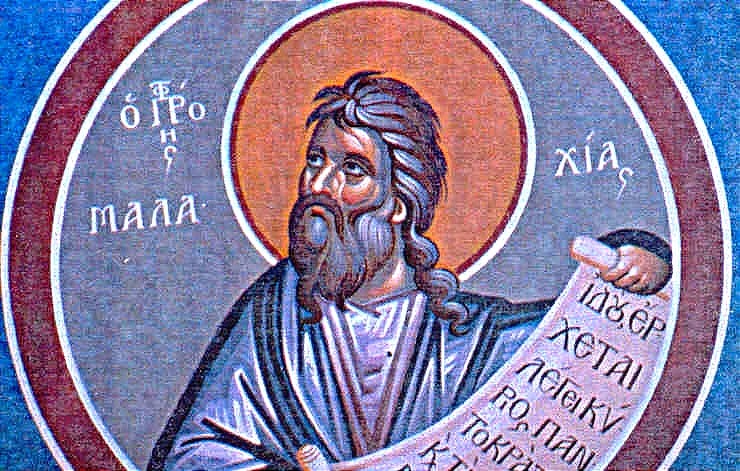
“I will send My messenger, who will prepare the way before Me. Then suddenly the Lord you are seeking will come to His temple; the Messenger of the covenant, whom you desire, will come,” says the LORD Almighty.”
—Malachi 3:1
“Prepare ye the way of the LORD”
At key junctures in redemptive history, the LORD1 would visit His covenant people Israel, review the history of His dealings with them, and usher in the next phase of His unfolding promises (Deuteronomy 29, 30; 1 Samuel 12; etc.).
Prior to these visitations, however, God called for a moral, ritual, and spiritual “cleaning of the house” in Israel, similar to what a nation might do in preparation for a state visit from the King of the United Kingdom or the Pope, or what a family might do before hosting an esteemed guest.
One particularly important visit occurred when God came down to the Israelites at Mount Sinai shortly after their exodus from Egypt to ratify His covenant with them and detail its stipulations through the law of Moses (Exodus 19:9–11, 14, 15):
“The LORD said to Moses, ‘I am going to come to you in a dense cloud, so that the people will hear Me speaking with you and will always put their trust in you.’ […]
And the LORD said to Moses, ‘Go to the people and consecrate them today and tomorrow. Have them wash their clothes and be ready by the third day, because on that day the LORD will come down on Mount Sinai in the sight of all the people.’ […]
After Moses had gone down the mountain to the people, he consecrated them, and they washed their clothes. Then he said to the people, ‘Prepare yourselves for the third day. Abstain from sexual relations.’”
Here, we see the common elements of preparatory consecration preceding a divine visitation, including the washing of garments and abstention from activities that cause ritual uncleanness (in this case, sexual relations; Leviticus 15:18). But there is another element implicit here that needs to be made explicit, for it is perhaps the most important element of all.
When the Mosaic covenant was later renewed at Shechem after the Israelites had entered the Promised Land (Joshua 21:45, 23:14, 24:25; cf. Genesis 12:7, 15:7–21), Joshua recounted God’s history with them up to that point (Joshua 24:1–13) and provided similar consecration instructions to those given at Mt. Sinai. On this occasion, however, the consecration consisted of the Israelites cleansing their ranks of foreign idols and choosing to serve the LORD wholeheartedly (Joshua 24:14–28; cf. Genesis 35:2)—in other words, repenting of their sins.2
The New Covenant represents the most pivotal redemptive historical transition of all, moving from the Old Covenant ratified by the blood of sacrificial animals (Exodus 24:5–8) to the New Covenant ratified by the infinitely precious blood Christ (Matthew 26:28; Mark 14:24; Luke 22:20; 1 Corinthians 11:25.). Thus we would expect to see an even greater consecration of God’s people through ritual cleansing and repentance prior to the visitation of God in the person of His incarnate Son, Jesus the Messiah3 (Matthew 16:16; John 1:14, 8:58; etc.), “the Mediator of a better covenant, which was established upon better promises” (Hebrews 8:6).
This is precisely what John the Baptist’s ministry was all about: preparing the way for the LORD by preparing God’s people to receive Him, and the next phase of His covenant promises to them, through the cleansing of baptism4 (1 Peter 3:21; Acts 22:16) and repentance for the forgiveness of sins (Mark 1:1–4; cf. Matthew 3:1–6; Luke 3:1–6; John 1:19–23):
“The beginning of the good news about Jesus the Messiah, the Son of God, as it is written in Isaiah the prophet:
‘I will send my messenger ahead of You, who will prepare Your way’ [Malachi 3:1]—
‘a voice of one calling in the wilderness, ‘Prepare the way for the LORD, make straight paths for Him.’’ [Isaiah 40:3]
And so John the Baptist appeared in the wilderness, preaching a baptism of repentance for the forgiveness of sins.”
As this passage indicates, and as we will demonstrate further below, the book of Malachi, being the last book of the Old Testament,5 perfectly anticipates the persons and events of the New Testament Gospels, particularly the ministries of John the Baptist and Jesus. Like Malachi, both John and Jesus prophetically called God’s people to repentance and covenant faithfulness in a time when both were in short supply.
Indeed, so hard-hearted had the people become that these prophets not only named their sins, but also explained in specific detail how they had committed them, connecting moral and spiritual dots for them that would otherwise have remained disconnected in their thinking.
Repent of what?
One of the many sad side effects of sin is its tendency to blind the sinner to the sinfulness of the very sins he is committing. As C. S. Lewis observed:
“When a man is getting better he understands more and more clearly the evil that is still left in him. When a man is getting worse, he understands his own badness less and less. A moderately bad man knows he is not very good: a thoroughly bad man thinks he is all right. This is common sense, really. You understand sleep when you are awake, not when you are sleeping. […] You can understand the nature of drunkenness when you are sober, not when you are drunk. Good people know about both good and evil: bad people do not know about either.”6
In short, the more we sin, the less we are aware of it.
The Bible calls this phenomenon “the deceitfulness of sin” (Hebrews 3:13) and it arises from sin’s hardening properties.7 Sin makes us calloused, insensible, and numb to evil, deadening our souls, searing our consciences, and thickening our skulls (Romans 1:28; Ephesians 2:1, 4:17, 18; 1 Timothy 4:2). As our condition worsens, so too does our ability to perceive our worsening condition (Proverbs 30:20):
“This is the way of an adulterous woman: She eats and wipes her mouth and says, ‘I’ve done nothing wrong.’”
Jeremiah 2:34, 35, 4:22:
“Yet in spite of all this you say, ‘I am innocent; He is not angry with me.’ But I will pass judgment on you because you say, ‘I have not sinned.’ […]
My people are fools; they do not know Me. They are senseless children; they have no understanding. They are skilled in doing evil; they know not how to do good.”
It was no different for the sinful priests and laypeople of Malachi’s day. When the prophet confronted them on their wrongdoings, it was obvious from their responses that they were more or less clueless as to the true state of their condition. As God shared His grievances with them, the people could only respond with quizzical shrugs and incredulous questions.
Malachi 1:2, 3:
“‘I have loved you,’ says the LORD.
‘But you ask, ‘How have You loved us?’
Was not Esau Jacob’s brother?’ declares the LORD. ‘Yet I have loved Jacob, but Esau I have hated’”
Malachi 1:6, 7:
“‘It is you priests who show contempt for My name.
But you ask, ‘How have we shown contempt for Your name?’
By offering defiled food on my altar.
But you ask, ‘How have we defiled You?’
By saying that the LORD’s table is contemptible.’”
Malachi 2:10–16:
“Do we not all have one Father? Did not one God create us? Why do we profane the covenant of our ancestors by being unfaithful to one another?
Judah has been unfaithful. A detestable thing has been committed in Israel and in Jerusalem: Judah has desecrated the sanctuary the LORD loves by marrying women who worship a foreign god. As for the man who does this, whoever he may be, may the LORD remove him from the tents of Jacob—even though he brings an offering to the LORD Almighty.
Another thing you do: You flood the LORD’s altar with tears. You weep and wail because He no longer looks with favor on your offerings or accepts them with pleasure from your hands. You ask, ‘Why?’ It is because the LORD is the witness between you and the wife of your youth. You have been unfaithful to her, though she is your partner, the wife of your marriage covenant.
Has not the one God made you? You belong to Him in body and spirit. And what does the one God seek? Godly offspring. So be on your guard, and do not be unfaithful to the wife of your youth.
‘The man who hates and divorces his wife,’ says the LORD, the God of Israel, ‘does violence to the one he should protect,’ says the LORD Almighty.
So be on your guard, and do not be unfaithful.”
Malachi 2:17:
“You have wearied the LORD with your words.
‘How have we wearied Him?’ you ask.
By saying, ‘All who do evil are good in the eyes of the LORD, and He is pleased with them’ or ‘Where is the God of justice?’”
Malachi 3:6–9:
“‘I the LORD do not change. So you, the descendants of Jacob, are not destroyed. Ever since the time of your ancestors you have turned away from My decrees and have not kept them. Return to Me, and I will return to you,’ says the LORD Almighty.
‘But you ask, ‘How are we to return?’
Will a mere mortal rob God? Yet you rob Me.
But you ask, ‘How are we robbing You?’
In tithes8 and offerings. You are under a curse—your whole nation—because you are robbing Me.’”
Malachi 3:13, 14:
“‘You have spoken arrogantly against Me,’ says the LORD.
‘Yet you ask, ‘What have we said against you?’
You have said, ‘It is futile to serve God. What do we gain by carrying out His requirements and going about like mourners before the LORD Almighty? But now we call the arrogant blessed. Certainly evildoers prosper, and even when they put God to the test, they get away with it.’”
In sum, the priests and people did not fear God, treating His name with the high reverence and esteem it deserves (Malachi 2:5, 3:5, 3:16, 4:2). Instead, they despised His steadfast love by forgetting His covenant blessings and curses (Malachi 1:2,3), defiled the His table by treating His sacraments with contempt (Malachi 1:6, 7), profaned His covenant by profaning their marriage covenants (Malachi 2:10–16), wearied Him by approving of evil and denying His just character (Malachi 2:17), robbed Him of glory by ignoring His commandments and neglecting the priesthood (Malachi 3:6–9), and arrogantly tested Him by false accusations of moral aloofness (Malachi 3:13).
If any of this sounds familiar to you from your own experiences with the American Church today, then take heart—at least you have enough awareness to sense these problems exist.
Spelling it out
If the LORD sent Malachi to the American Church today, what sorts of charges would he bring against us as 21st-century Christians? And how might the LORD answer the otherwise unasked questions the prophet’s charges would prompt?
As mentioned above, we have excellent templates for answering such questions in the prophetic ministries of John the Baptist and Jesus,9 both of whom preached a Gospel of repentance (Matthew 3:2, 4:17, etc.), just as Malachi predicted.
For example, John prepared the way for the Messiah’s coming not only by calling the people to repent of their sins (Malachi 3:1; 4:5, 6; cf. Matthew 11:10, 13, 14, 17:10–13; Mark 1:2–3, 9:11–13; Luke 1:17, 7:27), but also by answering their questions concerning what repentance required of them in practical terms (Luke 3:7–14):
“John said to the crowds coming out to be baptized by him, ‘You brood of vipers! Who warned you to flee from the coming wrath? Produce fruit in keeping with repentance. […] The ax is already at the root of the trees, and every tree that does not produce good fruit will be cut down and thrown into the fire.’
‘What should we do then?’ the crowd asked.
John answered, ‘Anyone who has two shirts should share with the one who has none, and anyone who has food should do the same.’
Even tax collectors came to be baptized. ‘Teacher,’ they asked, ‘what should we do?’
‘Don’t collect any more than you are required to,’ he told them.
Then some soldiers asked him, ‘And what should we do?’
He replied, ‘Don’t extort money and don’t accuse people falsely—be content with your pay.’”
In our earlier article “The Seven Deadly Sins of American Christianity” we listed what we consider to be the top seven sins plaguing the modern American Church, including divorce and remarriage, birth control, gender confusion, love of self, love of money, love of pleasure,10 and love of control.11 These represent the major, “plank-in-the-eye” sins (Matthew 7:3–5; Luke 6:41, 42) that most Christians tolerate, and even encourage, without so much as batting an eye.
But what would these charges look like if they were presented to us in Malachi fashion? Furthermore, how might we the accused object to these charges and how might God answer our objections?
On divorce and remarriage, the charge, objection, and answer might look something like this (cf. Malachi 2:10–16):
“‘You have violently desecrated My New Covenant.
But you ask, ‘How have we violated the New Covenant?’
By divorcing your wives and committing adultery through remarriage [Matthew 5:32, 19:9; Mark 10:11, 12; Luke 16:18], violently rending what God joined together for life [Matthew 19:6; Mark 10:9] and desecrating the holy mystery of Christ and His bride, the Church, that your marriages were supposed to reveal.’” [Ephesians 5:29–32]
On birth control (cf. Malachi 2:15, 3:13):
“‘You have withheld from Me the desires of my heart.
Yet you ask, ‘How have we kept from You Your heart’s desires?’
By mutilating your most sacred bodily members [Philippians 3:2], on which I bestowed the greater honor [1 Corinthians 12:21–26], poisoning the issues of life I gave you to cherish [Proverbs 5:15–20], and depriving Me of the holy children I longed to bless you with.’” [Psalm 127:3; 1 Corinthians 7:14]
On gender confusion (cf. Malachi 1:6, 7, 3:6–9):
“‘You have defiled My priesthood [Nehemiah 13:29] and made My house desolate. [Matthew 23:38; Luke 13:35]
You ask, ‘How have we polluted Your ministry and emptied Your house?’
By installing wayward women [Proverbs 2, 5, 6, 7] and spiritual infants [1 Corinthians 3:1] as shepherds of my flock [Isaiah 3:12; 1 Timothy 2:12] and emasculating already effeminate men12 [Leviticus 21:20–23; Deuteronomy 23:1; 1 Corinthians 6:9, 10], thereby perverting my good design of male and female [Genesis 1:27, 31] and reducing the temples of My body [Ephesians 1:22, 23; Colossians 1:18; Ephesians 5:23; 1 Corinthians 12:27] and yours bodies [1 Corinthians 6:19] to ruins devoid of My presence.’” [1 Samuel 4:21; Matthew 24:2; Mark 13:2; Luke 21:6; Revelation 3:20]
On love of self (cf. Malachi 1:2, 3, 2:17, 3:6–9, 13):
“‘You have hated me,’ says the LORD.
But you ask, ‘How have we hated you?’
By breaking the greatest commandment [Matthew 22:36–40; Mark 12:28–31], loving yourself and others above me [Luke 14:26; 2 Timothy 3:2–5], disregarding my precepts, statutes, and laws [Nehemiah 9:14], and reassuring others that they are at peace with Me, even though they walk in the stubbornness of their own sinful hearts.’” [Deuteronomy 29:19; Jeremiah 17:9; Galatians 6:7-8; 1 John 2:4]
On love of money (cf. Malachi 3:6–9, 13):
“‘It is not Me that you worship and obey, but another. [Matthew 4:10; Luke 4:8]
Yet you ask, ‘Who besides You have we worshipped?’
You worship your master Mammon and give him your highest allegiance [Matthew 6:24; Luke 16:13], for when I command you to do this or that, but Mammon dictates otherwise, it is Mammon, and not Me, that you obey.’” [Matthew 7:21; Luke 6:46; John 14:15]
On love of pleasure (cf. Malachi 1:2,3, 2:10–17, 3:6–9, 13):
“‘You have despised your birthright as children of God. [Genesis 25:34]
You ask, ‘How have we despised our birthright?’
By selling your soul [Matthew 16:26; Mark 8:36] for the momentary pleasures of sin [Hebrews 11:25], spending all that you have on yourself [Romans 2:8; James 4:3], rather than denying yourself [Matthew 16:24; Mark 8:34; Luke 9:23; John 12:25], and living for pleasure while being dead to Me.’” [Luke 12:20, 21; 1 Timothy 5:6]
On love of control (c. Malachi 2:10–17, 3:6–9, 13):
“You have become to Me like those who practice the dark arts.”
But you ask, ‘How have we practiced dark arts?”
By manipulating yourselves contrary to nature through crafty pharmakeia,13 usurping My prerogatives as God through a spirit of control (2 Timothy 1:7),14 and rebelling against My commands to trust and obey Me as LORD [Psalm 62:8; Proverbs 3:5, 6; John 14:15; etc.], which is equivalent to the sin of witchcraft.’” [1 Samuel 15:22, 23]
As sobering as these assessments may be, this is exactly where the American Church stands today.
But tell the average Christian that they have need of repentance, that they have shown contempt for, defiled, wearied, strayed from, robbed, or spoken against God as God’s people did in times past, and they will look at you as if you are the most benighted, legalistic soul this side of the Mississippi. Instead showing godly introspection and remorse (2 Corinthians 7:10, 13:5), they will dismiss your patient explanations, label you a Pharisee,15 and carry on with their lives as if the conversation never happened.
The American Church’s “Malachi moment” has arrived. The only question is, will it be ready for what comes next?
Ready or not
What’s gotten the American Church to this point and is there any hope for change as we approach Jesus’s Second Coming?
For starters, the Church’s leaders, its pastors, elders, and so forth, have simply not served as effective institutional gatekeepers, keeping sinful ideas and practices from infiltrating the life of God’s people. Instead, they have soft-pedaled sin, repentance, and judgment, inventing lame excuses to assuage guilty consciences, not least of which their own. In short, our leaders, compromised by their own sins, have not stood up to these very same sins when they crop up among their people.
In Malachi’s day, God’s priesthood had likewise abandoned its post, wandering from the ancient paths and good way (Jeremiah 6:16) and placing nothing but impediments to righteousness and enticements to sin before their people (Malachi 2:1–9; cf. Isaiah 59:2, Matthew 18:7, 23:13–15):
“‘And now, you priests, this warning is for you. If you do not listen, and if you do not resolve to honor My name,’ says the LORD Almighty, ‘I will send a curse on you, and I will curse your blessings. Yes, I have already cursed them, because you have not resolved to honor Me.
Because of you I will rebuke your descendants; I will smear on your faces the dung from your festival sacrifices, and you will be carried off with it. And you will know that I have sent you this warning so that My covenant with Levi may continue,’ says the LORD Almighty. ‘My covenant was with him, a covenant of life and peace, and I gave them to him; this called for reverence and he revered Me and stood in awe of My name. True instruction was in his mouth and nothing false was found on his lips. He walked with Me in peace and uprightness, and turned many from sin.
For the lips of a priest ought to preserve knowledge, because he is the messenger of the LORD Almighty and people seek instruction from his mouth. But you have turned from the way and by your teaching have caused many to stumble; you have violated the covenant with Levi,’ says the LORD Almighty. ‘So I have caused you to be despised and humiliated before all the people, because you have not followed My ways but have shown partiality in matters of the law.’”
Moreover, the laypeople of Malachi’s day, like the typical American Christian today, were not giving God their best, only their leftovers, and even that was considered an intolerable burden. Under these circumstances, God would prefer that we shutter our church doors altogether and spare Him the charade we call “worship” rather than drag His great name through the mud week after insufferable week (Malachi 1:10–14).
By lingering on in their lukewarm ways (Revelation 3:16; cf. 1 Kings 18:21), many professing Christians today have essentially become what Jesus described as “workers of lawlessness” (Matthew 7:23), those who live as if Christ has left nothing for us to do or obey (Matthew 28:20). Such people deceive themselves into thinking that God somehow evolved from a demanding disciplinarian in the Old Covenant to lax life coach in the New Covenant, when in fact He hasn’t changed in the slightest (Malachi 3:6; cf. Hebrews 13:8).
The only hope for change among believers this time around is nothing less than a baptism by fire, likely one involving suffering and even persecution (Romans 5:3–5; 2 Corinthians 4:17; 1 Peter 4:12, 13). For John baptized in water, but Jesus now baptizes us with the Holy Spirit and fire from Heaven (Malachi 3:1–4; cf. Matthew 3:10–12; Luke 3:16, 17; Acts 1:5, 8, 2:1–4):
“‘I will send my messenger, who will prepare the way before Me. Then suddenly the Lord you are seeking will come to His temple; the messenger of the covenant, whom you desire, will come,’ says the LORD Almighty.
But who can endure the day of His coming? Who can stand when He appears? For He will be like a refiner’s fire or a launderer’s soap. He will sit as a refiner and purifier of silver; He will purify the Levites and refine them like gold and silver. Then the LORD will have men who will bring offerings in righteousness, and the offerings of Judah and Jerusalem will be acceptable to the LORD, as in days gone by, as in former years.”
Jesus began to fulfill these verses during His first coming when He cleansed the temple (John 2:13–17; Matthew 21:12–13; Mark 11:15–19; Luke 19:45–48) and confronted the hypocrisy of the corrupt religious establishment (Matthew 23:13–39; Luke 11:37–54). His ministry acted like a sword of division among His people (Matthew 10:34; John 7:43), precipitating the rise and fall of many (Luke 2:34) as He was either rejected as a stumbling stone (Isaiah 8:14 & Isaiah 28:16; Romans 9:32–33; 1 Corinthians 1:23; 1 Peter 2:7–8) or embraced as the cornerstone (Psalm 118:22; Matthew 21:42 & Mark 12:10; cf. John 1:11).
If the axe was already laid to the root of the tree in the time of John and Jesus, then how much more will today’s unfruitful branches16 be cut off from the vine and cast into the fires of hell (Matthew 3:10, 7:19, 10:28; Luke 3:9, 12:4, 5, 13:6–9; John 15:6; Romans 11:18-22)?
As it was in days of old, the LORD is coming once more as the judge of all the earth (Genesis 18:25; Matthew 25:31, 32; John 5:22; Acts 17:31; 2 Timothy 4:1; etc.). He will again renew His covenant with His covenant people. Before this happens, He will again send Moses and Elijah—Moses, to testify concerning God’s history of redemption and commandments to us as Christians (e.g., Matthew 5–7, 28:20, etc.), and Elijah (Revelation 11:3–6; cf. Matthew 17:1–3; Mark 9:2–4; Luke 9:28–31; 2 Peter 1:17–18), who is the type to John the Baptist’s antitype (2 Kings 1:8; Matthew 3:4, 11:14, 17:12–13; Mark 1:6; Luke 1:17), to testify of the grace and truth that comes through Jesus Christ to all who repent and believe (John 1:17).
Above all, God is coming for a pure and spotless bride (Ephesians 5:25–27), clothed in “fine linen, bright and clean,” which is “the righteous deeds of the saints” (Revelation 19:8), wrought in them by God Himself (Ephesians 2:8–10; Philippians 1:9–11; Titus 2:14). If we do not clean up our acts and heed God’s warnings to repent now, we will not survive the scrutiny of that “great and dreadful day” (Malachi 4:1–6):
“‘Surely the day is coming; it will burn like a furnace. All the arrogant and every evildoer will be stubble, and the day that is coming will set them on fire,’ says the LORD Almighty. ‘Not a root or a branch will be left to them. But for you who revere My name, the sun of righteousness will rise with healing in its rays. [Matthew 11:4–6; Luke 7:22, 23] And you will go out and frolic like well-fed calves. Then you will trample on the wicked; they will be ashes under the soles of your feet on the day when I act,’ says the LORD Almighty.
‘Remember the law of My servant Moses, the decrees and laws I gave him at Horeb for all Israel.
See, I will send the prophet Elijah to you before that great and dreadful day of the LORD comes. He will turn the hearts of the parents to their children, and the hearts of the children to their parents; or else I will come and strike the land with total destruction.’”
The good news is, no matter how far gone the majority of so-called Christians becomes, there is always hope for the faithful minority (Malachi 3:16–18):
“Then those who feared the LORD talked with each other, and the LORD listened and heard. A scroll of remembrance was written in His presence concerning those who feared the LORD and honored His name.
‘On the day when I act,’ says the LORD Almighty, ‘they will be My treasured possession. I will spare them, just as a father has compassion and spares his son who serves him. And you will again see the distinction between the righteous and the wicked, between those who serve God and those who do not.”
This is what judgment day is all about: distinguishing the sheep from the goats (Matthew 25:31–46), the wheat from the chaff and weeds (Matthew 3:12, 13:24–30, 36–43; Luke 3:17), those who truly serve Christ as Lord from those who merely call Him “Lord, Lord,” but never get around to actually doing the things He says (Luke 6:46; cf. John 14:15).
May the LORD and Messenger of the covenant use our “Malachi Moment” to bring about our day of salvation.
“As God’s co-workers we urge you not to receive God’s grace in vain. For He says,
‘In the time of My favor I heard you,
and in the day of salvation I helped you.’
I tell you, now is the time of God’s favor, now is the day of salvation.”
—2 Corinthians 6:1, 2
Thanks for reading the League of Believers. We are committed to offering our content completely free of cost. You can support this ministry by:
Subscribing to the League of Believers.
Sharing the League of Believers with others.
Following, liking, and sharing our social media content on X and YouTube.
Sharing your feedback, including prayer requests, in the comments below or through emails to: feedback@leagueofbelievers.org
Praying for us and the message we are bringing to the Church (2 Thessalonians 3:1).
In English translations, “LORD” refers to God’s covenant name “YHWH” (Exodus 3:13–15), most likely pronounced “Yahweh.”
The fact that this is only hinted at in the clean garments requirement at Mt. Sinai is probably due to the fact that widespread idolatry would occur only after Moses had gone up the mountain to receive the law (Exodus 32), whereas at the end of Joshua’s tenure as Israel’s leader idol worship was likely more widespread and established (Joshua 24:14–24).
Jesus is the sum and substance of all Biblical prophecy (Revelation 19:10) and personally fulfills through the New Covenant all the covenant promises made to Noah, Abraham, Moses, and David (2 Corinthians 1:20).
Similar to mikveh ritual immersion baths used for ritual cleansing by the Jews from approximately one to two centuries prior Christ to the present day.
In the Christian Bible, not the Jewish Bible (aka, the Tanakh), where the last books are the Books of Chronicles (i.e., 1st and 2nd Chronicles in the Christian Bible).
Mere Christianity, Book III, Chapter 4, “Morality and Psychoanalysis.”
For more on this topic see Chapter 2 “The Serpent’s Playbook” and Chapter 3 “The Father of Lies” from the forthcoming League of Believers eBook Outwitted: How Christians Have Been Duped by the Enemy and What We Can Do to Wise Up.
Under the New Covenant, Christians are not required to tithe a tenth of their income, but rather are to give freely, and not under compulsion, that which they determine in their own hearts to give (2 Corinthians 9:7), as was also done with freewill offerings in the Old Testament (Exodus 35:4–9, 20–29, 36:6, 7; cf. 1 Chronicles 29:1–9). However, Christians, like their forebears under the Old Covenant, are to support and advance the kingdom mission of the Church as a first priority in all their day-to-day affairs (Matthew 6:32, 33; cf. Mark 4:18, 19):
“For the pagans run after all these things, and your heavenly Father knows that you need them. But seek first His kingdom and His righteousness, and all these things will be given to you as well.”
For example, Jesus frequently criticized the religious leaders during His earthly ministry (see the Gospels, Matthew, Mark, Luke, and John), warning against what He called “the leaven of the Pharisees, which is hypocrisy” (Luke 12:1).
He also gave numerous corrections and even rebukes in His letters to the churches of Asia Minor (Revelation 2 and 3) after His ascension into heaven. Jesus’s critiques included a lack of love (the church in Ephesus; Revelation 2:4, 5), abuse of grace as permission to sin (especially sexual sin and idolatry; the church in Pergamum; Revelation 2:14–16; the church in Thyatira; 2:20–23), spiritually deadness, lethargy, weakness, irresolution, forgetfulness, and uncleanness (the church in Sardis; Revelation 3:1–4), and lukewarmness, self-indulgence, and self-satisfaction coupled with spiritually poverty, disability, and exposure, owing to an almost complete absence of Christ’s presence (the church in Laodicea; Revelation 3:15–20).
Primarily drug based, aka pharmakeia.
See Chapter 5 “The Emasculators” from the League of Believers eBook “The (Ef)feminization of the Church: How American Christianity Lost Its Way by Losing Its Manhood.”
See footnote 11 above.
Think, for example, of the oft repeated abortion slogan “My body, my choice!” when Scripture says that we belong to God, both in body and spirit (Malachi 2:15; 1 Corinthians 6:19, 20).
Never mind that the Pharisees likewise rejected such charges when they were levied against themselves by John and Jesus!
Namely, Christians who fail to go on producing the fruits of repentance and faith in their lives to the end (Matthew 13:1–23, cf. Mark 4:1–20, Luke 8:4–15; Hebrews 6:4–8; etc.).
This cut to the heart ,in a good and sober way..